Compromised indoor air quality is a concern for homeowners, and carpet condition is often the main culprit. VOCs, bioloads, dust, and allergens trigger health problems, especially for allergic sufferers. DIY cleaning methods often fall short, which is why understanding how professional carpet cleaning can improve air quality becomes essential for maintaining a healthier home environment.
This article will explain in depth about dirt and other organisms that accumulate on carpet, disrupting air quality, highlight the impact of professional cleaning on air, compare the limits of self-vacuuming with the results of professional cleaning, and provide a carpet wellness checklist for maintaining air quality.
How Carpet Affects Indoor Air Quality?
Carpets trap more than dirt and debris. It attracts VOCs (volatile organic compounds) and bioloads, which, unlike dust and pollen particles, severely contaminate the indoor air.
So, what are VOCs and bioloads? How do they impact air quality? Let’s find out:
-> Volatile Organic Compounds (VOCs)
VOCs are carbon‑based chemicals that evaporate at room temperature and are released back indoors. Found in cleaning solutions and when used to clean carpets, especially in humid conditions, high moisture intensifies evaporation, allowing VOCs to linger longer in the air and further decline indoor air quality.
-> Bioloads
Bioloads are biological organisms in carpets, i.e., living contaminants like dust mites, bacteria, and mold spores, or organic debris such as dead skin cells. They either multiply or break down into allergic particles, contributing to poor indoor air quality.
How Professional Carpet Cleaning Can Improve Indoor Air Quality:
You know about the contaminants that are responsible for contaminated air. You may think that regular vacuuming or DIY cleaning methods may improve indoor air, but chances are your efforts may fall short in terms of effectiveness.
Self-carpet cleaning methods have limitations, especially when your goal is to improve air quality. Let’s have a quick peek at these limitations,
DIY limitations:
Only removes upper-layer dust and dirt, not set-in allergens.
Cannot achieve effective dust mite removal or neutralize hidden debris.
Cleaning solutions or adhesives leave behind VOC residues that humid conditions can re‑release into the air, especially in SWFL.
Fails to access carpet backing or sublayers where mold spores usually thrive.

Stage 1: Pre‑Vacuuming
Professional cleaners conduct thorough vacuuming to loosen dust and dirt. This initial step clears the surface layer and prepares the carpet for deeper treatment. However, it doesn’t achieve complete dust mite removal or allergen removal from fabric.
Stage 2: Hot Water Extraction
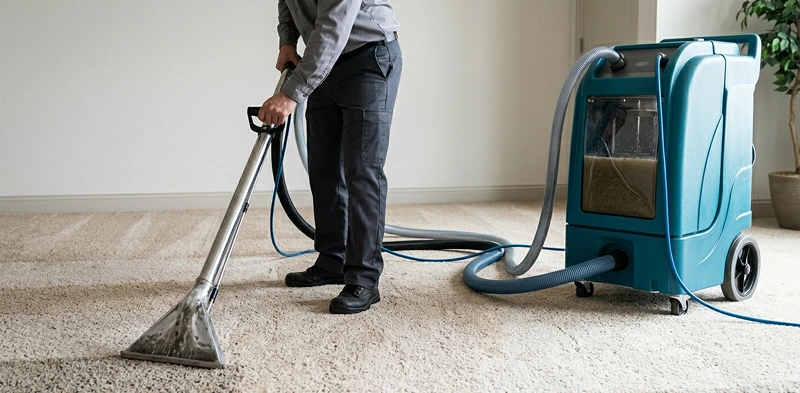
Heated water is injected deep into the carpet fabric and extracted with a suction tool. This helps remove allergens from carpet, breaks down organisms, and neutralizes dust mites. It also helps release trapped dampness that can hold VOCs, improving overall air quality.
Stage 3: Applying Cleaning Solutions
Technicians use specialized fabric-safe cleaning solutions to target bioloads and other organisms. It helps remove pollen from carpet and also clears other dirt particles, which may worsen allergies. Carpets cleaned with tailored solutions also develop the capacity to resist microbial growth, boosting fabric protection.
Stage 4: Deep Extraction and Drying
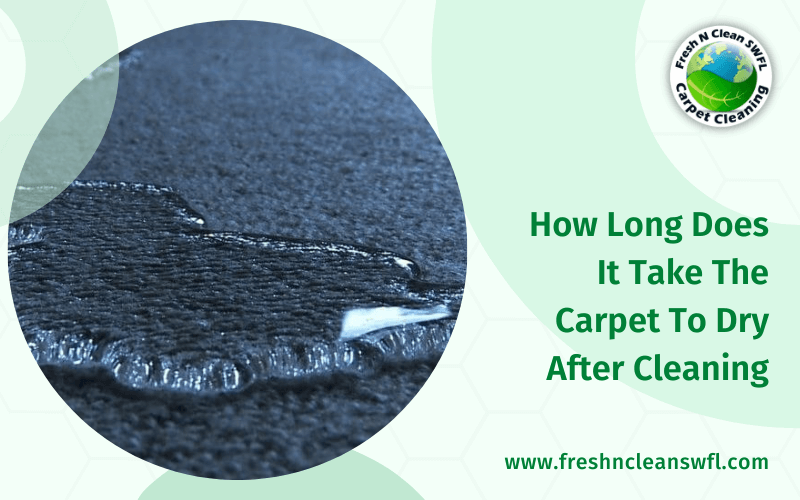
This is the final step of carpet cleaning to remove allergens. Professionals use high‑capacity extraction equipment that reaches the carpet backing and padding to eliminate any leftover dirt. While ventilation helps dry carpet, controlled drying reduces moisture fast, stopping mold regrowth, dust mite reinfestation, and odors.
Vacuuming vs Professional Carpet Cleaning
You saw how professional carpet cleaning can help improve air quality. Now, for a better understanding, take a closer look at the comparison between regular vacuuming and professional carpet cleaning to make a concise decision.
| Factor | Regular Vacuuming | Professional Carpet Cleaning |
|---|---|---|
| Allergen Removal | Lifts surface allergens | Extracts allergens from deep fibers |
| Dust Mite Removal | Ineffective; may push deeper | Heat and extraction kill and terminate dust mites |
| VOC Removal | Does not address VOCs | Hot water extraction breaks down and eliminates VOCs |
| Bioload Reduction | No impact, instead might spread bacteria | Cleaning solutions eliminate bacteria and mold spores |
| Mold Growth | Moisture remains, promoting mold | Controlled drying (4 to 6 hours) prevents regrowth |
| Pollen Removal | Only surface-level removal | Deep extraction removes pollen from the carpet base |
| Cleaning Frequency | Many times per week (more in humid areas like SWFL) | Every 6 to 12 months (humid areas: 4 to 6 months) |
| Costs | Small monthly expenses (replacing filter or bag) | One-time professional investment per room |
| Health Impact | Minimal, only temporary relief | Noticeable improvement in indoor air quality, long-lasting impact |
| Best For | Routine maintenance between deep cleans | Thorough allergen, VOC, and bioload removal |
Carpet Wellness Checklist: Tips for Maintenance
Professional carpet cleaning restores air freshness and hygiene, but results last longer when backed by routine maintenance. This means the cleaner the carpet is, the fresher the air. Below is your carpet wellness checklist, which also maintains proper air quality:
1. Vacuum carpets 2 to 3 times per week to capture fine dust and allergens, reducing airborne particles.
2. Spot clean spills immediately with mild, low‑VOC solutions. Prevents bacterial growth and stops chemical fumes from mixing with indoor air.
3. Keep indoor humidity in check. Lower humidity slows mold growth and prevents harmful particles from spreading into the air.
4. Rotate furniture every few months to make sure there’s no hidden dust buildup, which can compromise air quality.
5. Place entry mats at doors to trap pollen and dirt. This lowers allergens from the carpet and reduces the chances of air contamination.
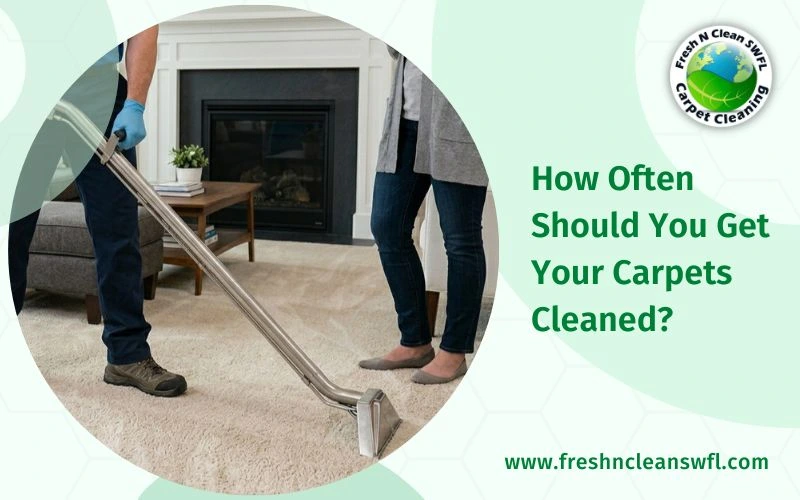
6. Schedule professional cleaning of carpets every 6 to 12 months to eliminate allergens, VOCs, and bioloads, and improve air quality. For SWFL humid regions, once cleaning every 4 to 6 months is recommended.
7. Dry carpets completely within 24 hours of DIY or professional cleaning to stop moisture from turning into mold spores that pollute the air.
8. Choose eco-friendly cleaners; avoid harsh chemicals. This minimizes the risk of VOC emissions, keeping indoor air fresher and safer.
9. Avoid making common carpet cleaning mistakes, as they nullify the effects of professional carpet cleaning, which is something you don’t want.
Allow Professional Carpet Cleaners to Improve Indoor Air Quality
Now you know how professional carpet cleaning can improve air quality, and it’s not just for aesthetics; it’s a health intervention. Reducing VOCs, allergens, dust mites, and mold spores improves indoor air quality. In humid regions such as Southwest Florida, regular carpet cleaning is critical to prevent mold and protect health of family members.
At Fresh N Clean SWFL, we offer a reliable carpet cleaning service using the latest equipment and techniques. Our experienced team is trained to deliver quality-driven results, so you get a clean carpet and a better house environment.
Contact us today and book your carpet cleaning session so your family members can relax and breathe fresh air.
FAQs
Q: How does carpet cleaning improve indoor air quality?
A: Carpet cleaning removes allergens, VOCs, and dust trapped in fibers. However, self-cleaning methods struggle to deliver long-term results. Professional carpet cleaning helps maintain fresher, healthier indoor air.
Q: Can dirty carpets make you sick?
A: Yes, it can. Carpet supports indoor air quality, and its condition has a straightforward impact on your home environment. A dirty carpet harbors dust, pollen, and VOC residues, which degrade the air quality.
Q: How often should I clean my carpets for better air quality?
A: Get your carpets professionally cleaned every 6 to 12 months to remove allergens and VOCs. For households with allergy sufferers, respiratory problems, or humid conditions, we recommend getting it early and often (every 4 to 6 months).
Q: What is the best way to stop carpet dust from getting in the air?
A: Regular vacuuming with a proper filter unit traps dust particles before they spread into the air. Followed by drying of carpet to prevent dust, spores, or allergens from becoming airborne.